
Summary
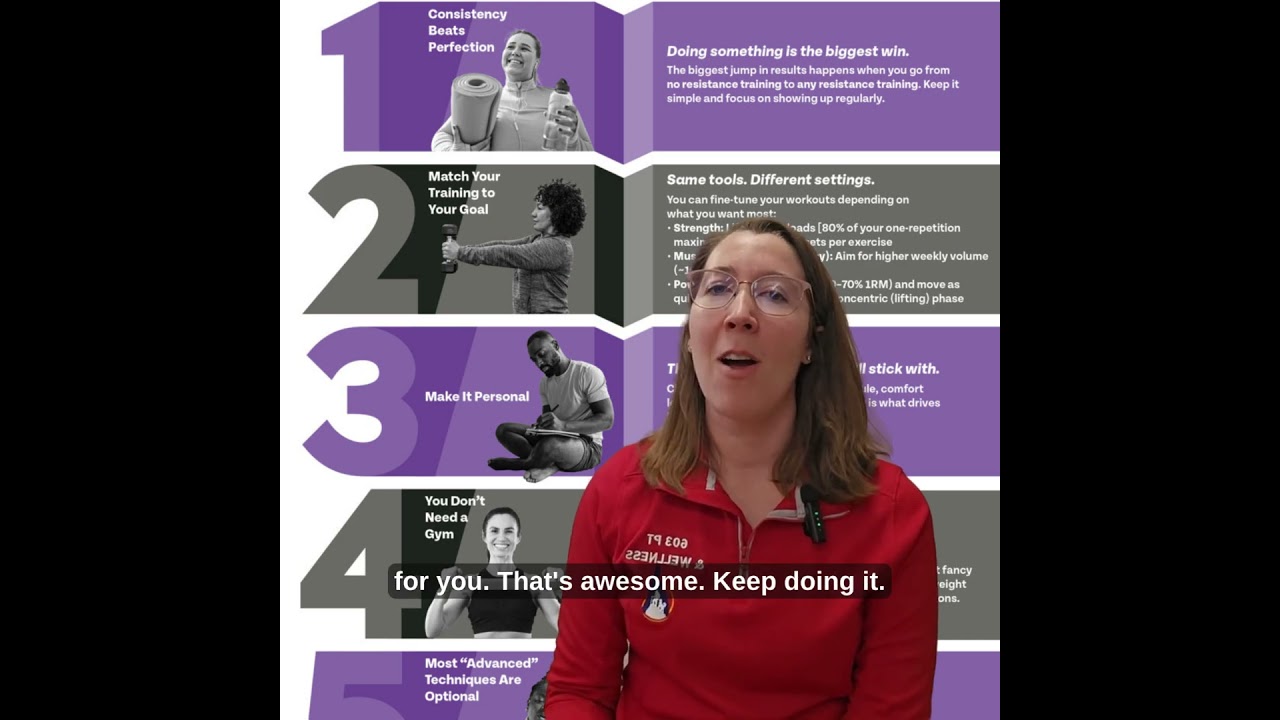
The American College of Sports Medicine has released new guidelines emphasizing the importance of consistency in strength training. According to the guidelines, **at-home workouts** and **body weight exercises** can be just as effective as gym-based workouts. This shift in approach is expected to make strength training more accessible to people who may not have access to a gym or prefer to work out at home. The guidelines also highlight the importance of **progressive overload**, where individuals gradually increase the intensity of their workouts over time. For example, the [[american-college-of-sports-medicine|American College of Sports Medicine]] recommends increasing the weight or resistance used in workouts by **2.5-5kg** every **2-4 weeks**. Additionally, the guidelines emphasize the importance of **proper form and technique**, as well as **listening to one's body** and **resting when needed**. As noted by [[dr-jill-seladi-schulman|Dr. Jill Seladi-Schulman]], a freelance medical writer and fact checker, proper form and technique are crucial for effective and safe strength training. The new guidelines are expected to have a significant impact on the way people approach strength training, making it more accessible and effective for a wider range of individuals. With the rise of **at-home workouts** and **online fitness programs**, it's easier than ever to get started with strength training. For instance, the [[national-academy-of-sports-medicine|National Academy of Sports Medicine]] offers a range of online resources and certifications for personal trainers and fitness enthusiasts. Furthermore, the guidelines highlight the importance of **consistency** and **patience**, as strength training is a long-term process that requires dedication and perseverance. As emphasized by the [[world-health-organization|World Health Organization]], regular physical activity, including strength training, is essential for maintaining good health and reducing the risk of chronic diseases.
Key Takeaways
- The American College of Sports Medicine has released new guidelines for strength training
- The guidelines emphasize the importance of consistency and progressive overload in strength training
- At-home workouts and body weight exercises can be just as effective as gym-based workouts for strength training
- Proper form and technique are crucial for effective and safe strength training
- The guidelines may not be suitable for all populations, such as older adults or individuals with disabilities
Balanced Perspective
The new guidelines provide a more **inclusive** approach to strength training, recognizing that not everyone has access to a gym or prefers to work out at home. The emphasis on **consistency** and **progressive overload** is also a positive development, as it provides a clear framework for individuals to follow. However, it's also important to note that **proper form and technique** are crucial for effective and safe strength training. As highlighted by the [[national-strength-and-conditioning-association|National Strength and Conditioning Association]], proper form and technique can help prevent injuries and ensure that individuals get the most out of their workouts. Additionally, the guidelines may not be suitable for everyone, particularly those with certain health conditions or injuries. It's essential for individuals to consult with a healthcare professional before starting any new exercise program.
Optimistic View
The new guidelines are a game-changer for people who want to get started with strength training but may not have access to a gym. With the emphasis on **at-home workouts** and **body weight exercises**, individuals can now achieve their fitness goals from the comfort of their own homes. This shift in approach is also expected to increase **participation rates** in strength training, as people are more likely to stick to a workout routine that they can do at home. As noted by the [[american-council-on-exercise|American Council on Exercise]], at-home workouts can be just as effective as gym-based workouts, as long as individuals are consistent and progressive in their training. Moreover, the guidelines provide a **clear and concise** roadmap for individuals to follow, making it easier for them to get started with strength training and achieve their fitness goals.
Critical View
The new guidelines may oversimplify the complexity of strength training, potentially leading to **injuries** or **ineffective workouts**. The emphasis on **at-home workouts** and **body weight exercises** may not be sufficient for individuals who require more **structured** or **supervised** training. Moreover, the guidelines may not provide enough guidance on **proper form and technique**, which is essential for safe and effective strength training. As noted by the [[american-physical-therapy-association|American Physical Therapy Association]], proper form and technique can help prevent injuries and ensure that individuals get the most out of their workouts. Furthermore, the guidelines may not address the **individualized** needs of different populations, such as older adults or individuals with disabilities. For example, the [[centers-for-disease-control-and-prevention|Centers for Disease Control and Prevention]] recommend that older adults engage in **regular physical activity**, including strength training, to maintain good health and reduce the risk of chronic diseases.
Source
Originally reported by Healthline